
Overview
Enjoy the Rome City Pass to the Rome Colosseum and get a discount on Rome attraction tickets and Rome museum tickets. Take advantage of the Roma Pass for the Rome metro and public transport.
- Recommended by 98% of travelers
- Badge of Excellence
- Mobile ticket
What's included
Tickets to the Colosseum
Free access to toilet services of the P-Stop network
Endless use of public transport (buses, metro, tram, etc)
Valid 48 hours from the first validation at museums and public transport
Discount and special prices for exhibitions, attractions, and tourist services
Reduced ticket to all other museums and/or archaeological sites and/or experiences visited
All fees and/or taxes
Transfers to and from airports (Leonardo Express train, FR1 metropolitan train, local urban service)
Meeting and pickup
Travelers meet at the meeting point.
Good to know
If you want to redeem your ticket from Roma Termini(Outside office), please communicate via email or via whatsApp to make appointment.
What to expect
-
Colosseum
2 hours
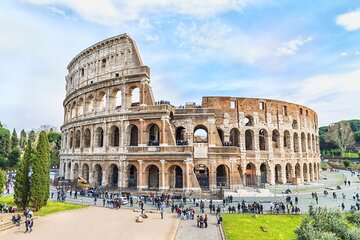
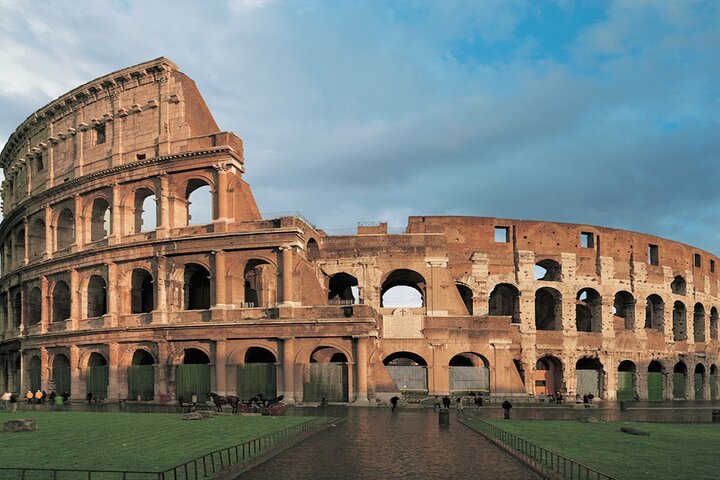
The Flavian Amphitheatre, more commonly known as the Colosseum, stands in the archaeological heart of Rome and welcomes large numbers of visitors daily, attracted by the fascination of its history and its complex architecture.
The building became known as the Colosseum because of a colossal statue that stood nearby. It was built in the 1st century CE at the behest of the emperors of the Flavian dynasty. Until the end of the ancient period, it was used to present spectacles of great popular appeal, such as animal hunts and gladiatorial games. The building was, and still remains today, a spectacle in itself. It is the largest amphitheatre in the world, capable of presenting surprisingly complex stage machinery, as well as services for spectators.
A symbol of the splendour of the empire, the Amphitheatre has changed its appearance and its function over the centuries, presenting itself as a structured space but open to the Roman community. -
Palatine Hill
1 hour
The Palatine hill preserves the remains of Iron Age settlements connected with the earliest core of the city of Rome. The hill was home to important civic cults, including the Magna Mater (Cybele) and, between the 2nd and 1st centuries BC, it became the residential district of the Roman aristocracy, with elegant houses characterised by exceptional painted and paved decorations, such as those preserved in the House of the Griffins. Augustus symbolically chose the hill as the site of his own house, which consisted of several buildings, including the House of Livia. Later the hill became the site of the imperial palaces: the Domus Tiberiana, the Domus Transitoria and then the Domus Aurea, and finally the Domus Flavia, divided into a public and private sector, the latter being known as the Domus Augustana. The presence of the imperial residences on the hill gave rise to a process of identification. In this way the toponym Palatium came, in modern languages, to mean a royal palace.
-
Foro Romano
1 hour
The Forum was originally covered by a swamp. It was only in the late 7th century BCE that the valley was reclaimed and the Roman Forum began to take shape. It was destined to remain the centre of public life for over a millennium.
The various monuments were built through the centuries: first the buildings for political, religious and commercial activities, then during the 2nd century CE the civil basilicas, used for judicial activities. Already at the end of the republican age, the ancient Roman Forum had become insufficient to serve as the administrative and representative centre of the city.
The various dynasties of emperors added only prestigious monuments: the Temple of Vespasian and Titus and that of Antoninus Pius and Faustina, dedicated to the memory of the deified emperors, and the monumental Arch of Septimius Severus, built at the western end of the Forum in 203 CE to celebrate the emperor’s victories over the Parthians.
Cancellation Policy
All sales are final. No refund is available for cancellations.
Times are local to the experience (Europe/Rome).
Additional Information
- Travelers should have at least a moderate level of physical fitness
- Mobile or paper ticket accepted
- Up to 15 travelers per booking
FAQs about Rome Colosseum Experience with Rome City Pass & Public Transport
Can I cancel Rome Colosseum Experience with Rome City Pass & Public Transport for free?
No. All sales are final. No refund is available for cancellations.
How long does it take?
It takes about 3–4 hours.
What's included?
- Tickets to the Colosseum
- Free access to toilet services of the P-Stop network
- Endless use of public transport (buses, metro, tram, etc)
- Valid 48 hours from the first validation at museums and public transport
- Discount and special prices for exhibitions, attractions, and tourist services
- Reduced ticket to all other museums and/or archaeological sites and/or experiences visited
What's not included?
- Transfers to and from airports (Leonardo Express train, FR1 metropolitan train, local urban service)
Which places does it visit?
It visits Colosseum, Palatine Hill, Foro Romano.
What fitness level is needed?
Travelers should have at least a moderate level of physical fitness.
Operated by Reliant Tours